
Cybersecurity is no longer just an IT responsibility. Every employee who opens an email, shares a file, accesses a business application, or handles customer information plays a role in protecting the organization.
While businesses invest in firewalls, endpoint protection, and other security technologies, cybercriminals continue to exploit one of the most unpredictable elements of cybersecurity: human behavior.
A convincing phishing email, a fake invoice, or an urgent message impersonating a senior manager can trigger a security incident with serious business consequences. A compromised account may expose confidential information, disrupt daily operations, or even lead to financial losses.
Not every cybersecurity crisis begins with a sophisticated cyberattack. Sometimes, it starts with an ordinary work conversation.
An employee may unintentionally share an internal document with the wrong recipient, expose confidential information during a screen-sharing session, or paste sensitive business data into an unapproved AI tool while seeking help with a work-related task. Information that was meant to remain internal may then reach unauthorized parties, creating risks that extend far beyond the initial mistake.
Depending on the nature of the information exposed, the consequences may include contractual disputes, financial losses, regulatory concerns, damage to customer relationships, or reputational harm. What begins as a seemingly minor oversight can escalate into a serious business crisis if the exposure goes unnoticed or is not handled promptly.
Well-informed employees can help prevent security incidents from escalating into business crises. By recognizing warning signs, handling information responsibly, and reporting suspicious activities or accidental disclosures early, employees become an important part of the organization’s cybersecurity defense.
This is why Security Awareness Training (SAT) is more than just an IT initiative. It is an investment in risk prevention, business continuity, and organizational resilience.
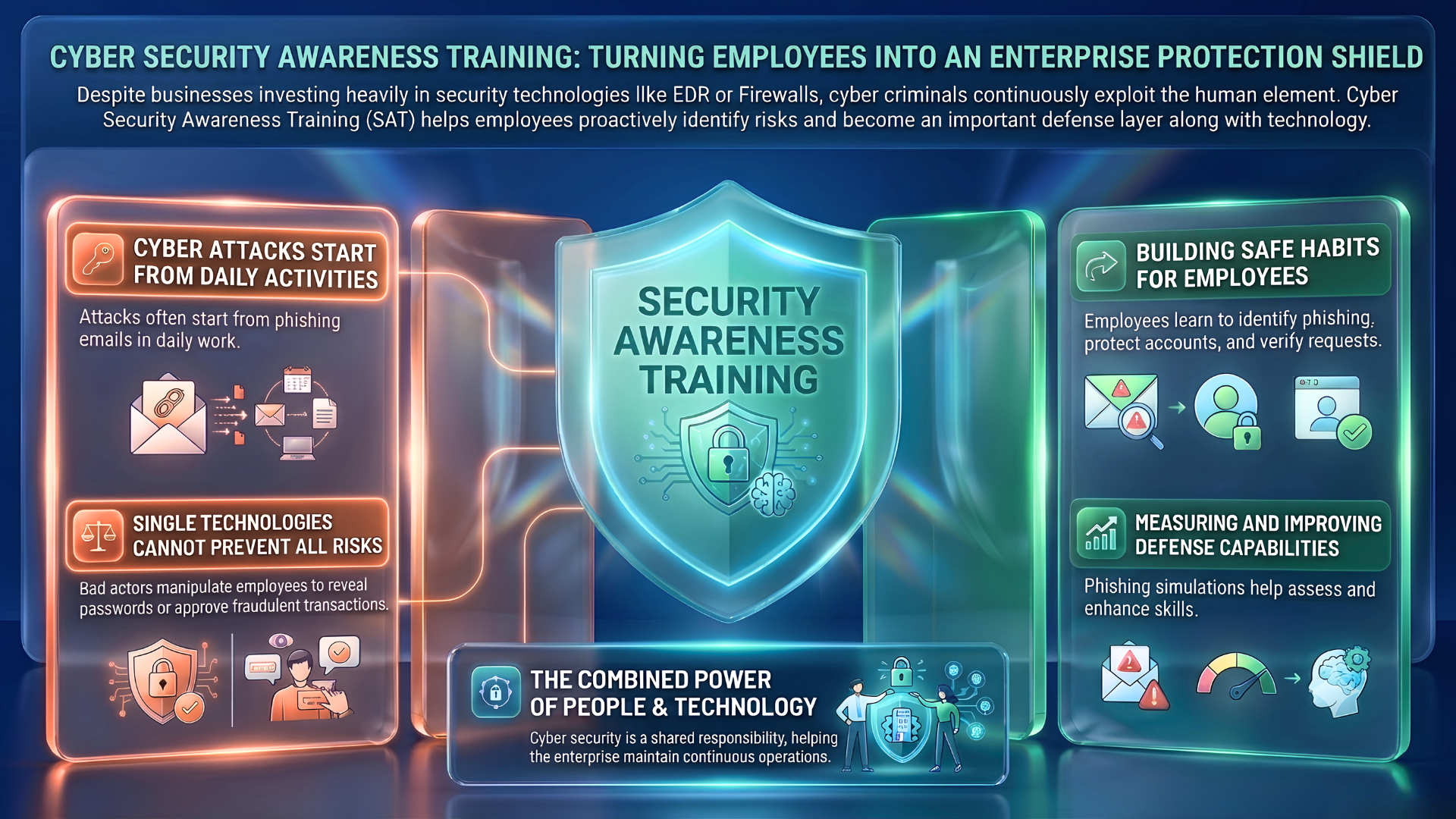
1. Cyber Threats Often Begin with Everyday Activities
Many cyberattacks start with routine business communications. Employees may receive emails that appear to come from trusted suppliers, customers, colleagues, or senior management. These messages may ask them to open an attachment, verify an account, update payment details, or respond to an urgent request.
Under pressure or during a busy workday, it can be difficult to recognize the warning signs.
For example, an employee receives a fake supplier invoice and unknowingly enters their Microsoft 365 credentials on a fraudulent website. Attackers could then attempt to access company emails, obtain sensitive information, or impersonate the employee to target other colleagues.
Security risks can also emerge during normal collaboration. An employee discussing a project might attach an internal report to an external email without checking the recipients, grant overly broad access to a shared file, or disclose confidential details in a conversation with an unauthorized party.
SAT helps employees recognize suspicious messages, verify unusual requests through trusted channels, check sharing permissions, and think carefully before clicking unfamiliar links or disclosing sensitive information.
The earlier employees recognize and report a potential threat or accidental disclosure, the better positioned the organization is to respond before the situation escalates.
2. Technology Alone Is Not Enough
Security solutions such as Endpoint Detection & Response (EDR) help detect, investigate, and respond to suspicious activities on company devices. Firewalls, email security, and multi-factor authentication (MFA) provide additional layers of protection.
However, no single security solution can eliminate every risk. Some attacks rely on manipulating employees into voluntarily sharing credentials, approving fraudulent payments, or granting access to sensitive information. Other incidents result from accidental disclosure rather than malicious activity.
SAT complements these technical controls by helping employees understand the risks behind their everyday actions and make safer decisions when handling information, communicating with others, and using digital tools.
Technology helps detect and respond to threats. Employee awareness helps reduce the risk of unsafe actions and accidental data exposure that can put the business at risk.
When people and technology work together, businesses are better equipped to prevent incidents, limit their impact, and maintain operational continuity.
3. Build Safer Habits Across the Organization
Effective SAT is more than a one-time presentation or an annual reminder to be careful. It helps employees develop practical habits they can apply in their daily work.
Key areas include:
Identifying suspicious senders, misleading links, unexpected attachments, and unusual requests.
Using strong, unique passwords and enabling multi-factor authentication (MFA) wherever possible.
Protecting confidential information, checking recipients and file-sharing permissions, and avoiding accidental data exposure.
Confirming payment changes or urgent instructions through a trusted communication channel.
Knowing what to do and whom to contact when something does not look right or information has been shared accidentally.
Understanding the risks of entering sensitive business information into unapproved applications or AI platforms.
When these practices become part of everyday work, employees are better equipped to identify potential threats and respond appropriately, helping reduce avoidable risks across the organization.
4. Turn Security Awareness into Measurable Improvement
Businesses need more than the assumption that employees know how to stay safe online. They need ways to assess whether security knowledge translates into safer behavior.
SAT programs can incorporate simulated phishing exercises, assessments, and regular progress reports to evaluate how employees respond to potential threats.
These insights help organizations identify common knowledge gaps, provide targeted training, and track improvements over time.
Useful indicators include phishing simulation click rates, suspicious-email reporting rates, training completion, and the time taken to report potential threats or accidental disclosures.
The goal is not to blame employees for mistakes. It is to understand where additional guidance is needed and continuously improve the organization’s ability to recognize and respond to cyber risks.
5. Make Cybersecurity Everyone’s Responsibility
A single employee’s actions can affect the wider organization. Likewise, an employee who recognizes a suspicious email, questions an unusual request, or notices that confidential information has been shared with the wrong person may help prevent a more serious incident.
Building a security-aware workforce means creating an environment where employees understand their responsibility to protect company information, follow appropriate data-handling practices, and know how to respond when something goes wrong.
This shared responsibility is particularly important for businesses where data exposure, financial fraud, or operational downtime can affect customers, business partners, and overall performance.
Cybersecurity awareness is not about expecting employees to stop every attack or avoid every mistake. It is about helping them recognize risks earlier, handle information responsibly, and take the right action before a small incident becomes a major business disruption.
A Stronger Defense Starts with Both Technology and People
Cybersecurity is strongest when people and technology work together.
EDR helps protect company devices by detecting and responding to endpoint threats. Security Awareness Training helps employees recognize phishing attempts, social engineering, unsafe data-sharing practices, and other common sources of risk.
Together, these complementary layers of defense can help businesses reduce risk, respond more effectively to incidents, and build a stronger security culture.
At ITM Management, we believe effective cybersecurity combines the right technology with informed people. Because protecting a business is not just about stopping threats — it is also about helping the organization stay resilient when challenges arise.