
Ransomware Is the Fastest-Growing Cyber Threat and SMBs Are Now on the Front Line
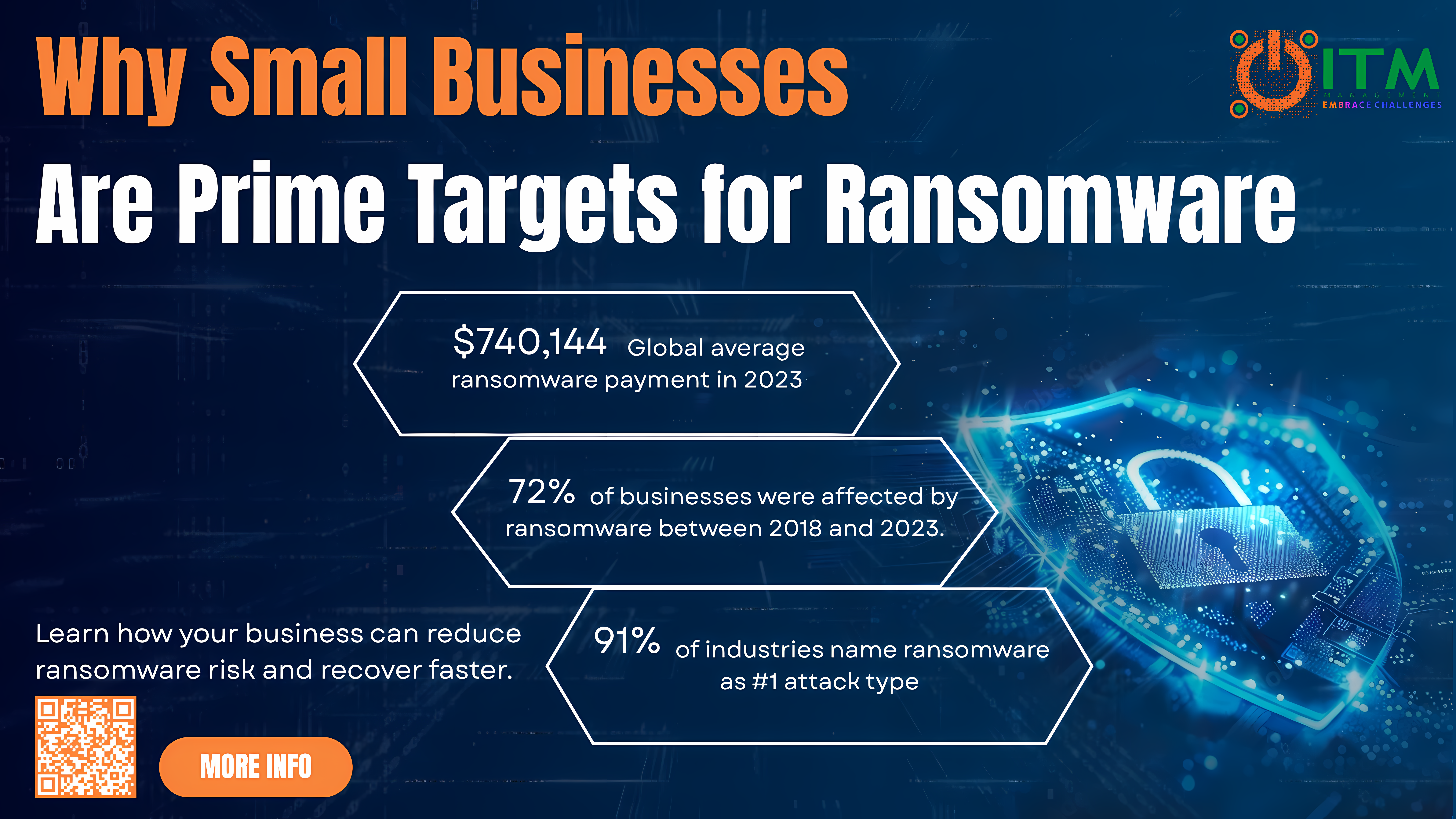
Ransomware has rapidly evolved from an occasional IT issue into a serious business risk. What was once considered a threat limited to large enterprises is now impacting organizations of every size. Since 2020, ransomware activity has surged dramatically, driven by more sophisticated attack methods and the growing digital dependence of businesses.
Today, no organization is immune. Cybercriminals no longer focus on company size they look for weakness, lack of preparedness, and gaps in cybersecurity defenses. Unfortunately, small and mid-sized businesses often fit this profile, making them increasingly attractive targets.
What Is Ransomware and Why It Disrupts Businesses So Quickly
Ransomware is a type of malicious software that locks users out of systems or data, either partially or completely. Once an attack is executed, critical files are encrypted and access to essential systems is denied, bringing daily operations to an immediate halt.
Attackers then demand a ransom payment in exchange for restoring access. Under pressure to resume operations, many businesses feel forced to make difficult decisions quickly often without fully understanding the extent of the damage or whether recovery will be successful.
Because ransomware can spread rapidly across connected systems, a single compromised endpoint can escalate into a full-scale operational shutdown in a very short time.
Ransomware Is Growing Faster Than Ever Across All Industries
The growth of ransomware is not slowing down. In fact, it has become one of the most dominant cyber threats worldwide.
-
- ~69% of businesses were hit by ransomware (2025 data).
- Ransomware incidents rose ~58% in 2025 – the highest level ever recorded.
- Average total costs per ransomware event now range from $1.8M to $5M.
These figures highlight a critical reality: ransomware is no longer a niche threat or an isolated risk. It impacts organizations across every industry, and the financial consequences continue to rise year over year.
For SMBs, even one ransomware incident can lead to prolonged downtime, lost revenue, damaged customer trust, and long-term operational disruption.
Why Common SMB Assumptions About Ransomware Are So Dangerous
Despite the data, many small and mid-sized businesses continue to rely on outdated assumptions, such as:
-
- “We’re too small to be a target.”
- “Cybersecurity is too expensive for our business.”
- “We don’t have anything attackers want.”
These beliefs create a false sense of security. In reality, cybercriminals actively pursue smaller organizations because they are often easier to breach, less monitored, and slower to recover. Ransomware doesn’t discriminate by size it exploits gaps.
Structural Weaknesses That Make SMBs Prime Ransomware Targets
SMBs face structural challenges that naturally increase their exposure to ransomware. Large enterprises invest heavily in dedicated security teams, advanced tools, and layered defenses. Most SMBs simply do not have the same resources.
Limited security budgets, stretched IT teams, and a lack of specialized cybersecurity expertise often result in outdated defenses, unpatched systems, and incomplete recovery plans. Backup solutions may exist, but they are not always designed to support fast, reliable recovery during an active ransomware incident.
Attackers understand these weaknesses and deliberately target SMB environments where the likelihood of disruption and pressure to pay is higher.
Perception vs. Reality: Where Many SMBs Are Most Exposed
A major risk for SMBs lies in the gap between perceived protection and actual preparedness. While 80% of SMBs believe they are well protected against cyberthreats, only 20% have basic security measures in place, such as cybersecurity awareness training and multi-factor authentication (MFA).
This disconnect leaves organizations vulnerable to attacks that could otherwise be prevented or contained. When ransomware strikes, the absence of these fundamentals significantly increases the chance of a successful breach and prolongs recovery time.
How IT Preparedness Changes the Outcome of a Ransomware Attack
The good news is that ransomware risk can be significantly reduced. While no business can eliminate cyber threats entirely, preparedness fundamentally changes the outcome of an attack.
Prepared organizations invest in cybersecurity awareness, maintain reliable and tested backup strategies, and ensure they can restore systems quickly without relying on ransom payments. Instead of reacting in panic, they respond with control.
With the right IT preparedness approach, businesses can limit disruption, protect critical data, and recover faster even when an attack occurs.
The Bottom Line: Ransomware Targets Weakness, Not Company Size
Ransomware does not target revenue or headcount. It targets organizations that are unprepared.
For small and mid-sized businesses, improving IT preparedness is no longer optional. It is the most effective way to reduce ransomware risk, protect essential systems, and ensure long-term business continuity.
Protect Your Business Before Ransomware Strikes
Ransomware doesn’t wait and neither should you. Every day without proper preparedness increases the risk of downtime, data loss, and costly recovery efforts.
ITM helps small and mid-sized businesses reduce ransomware risk through proactive IT preparedness. Our experts assess your current security posture, identify critical gaps, and implement practical, cost-effective solutions that protect your systems, data, and operations before an attack happens.
-
- Reduce ransomware exposure
- Strengthen backup and recovery readiness
- Restore operations without paying a ransom
Talk to ITM today to evaluate your ransomware risk and build a stronger, more resilient IT foundation.