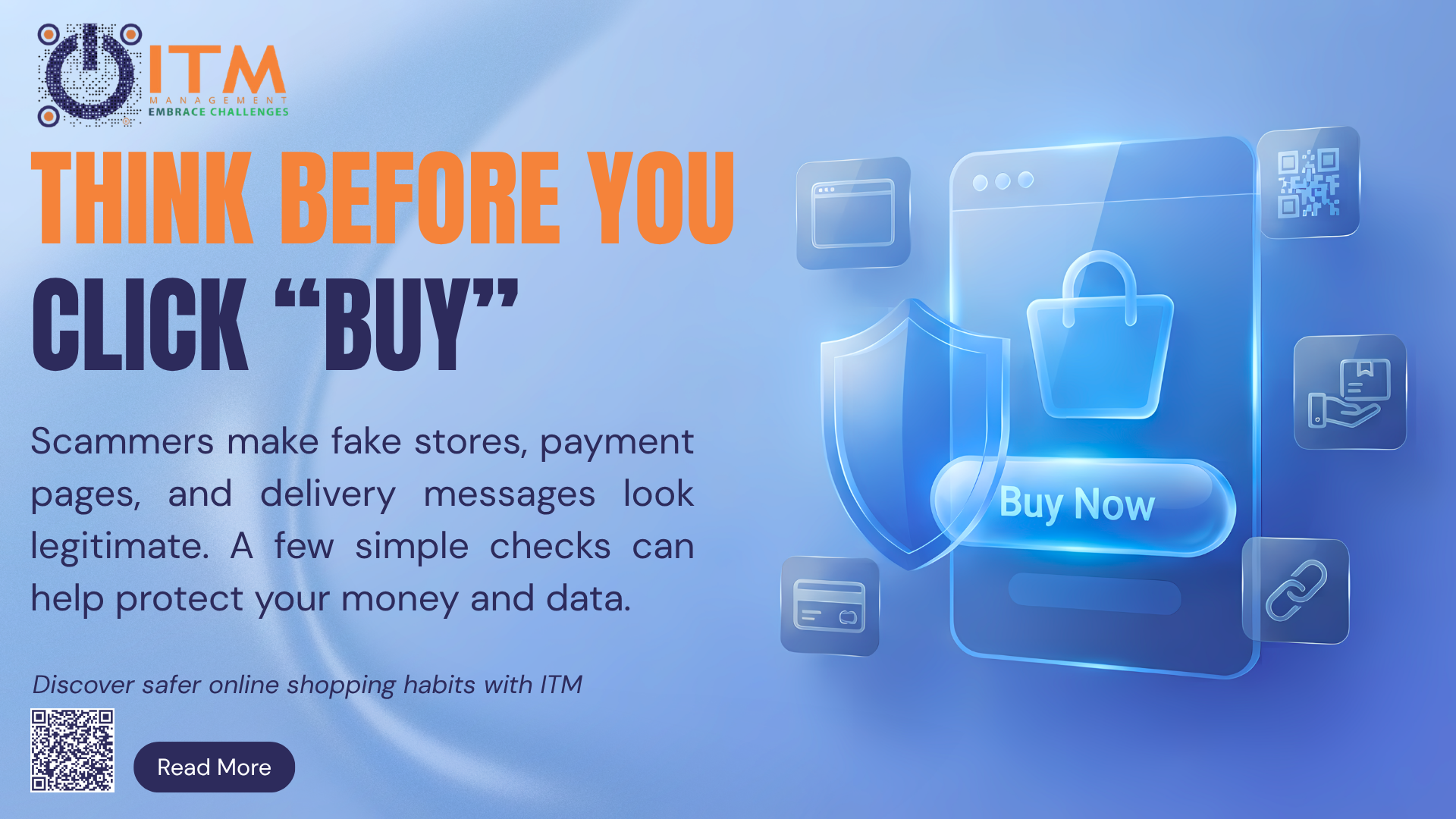

Online shopping is convenient, but scammers are getting smarter. Here’s how to stay safe before you click “Buy now”.
Online shopping has become a normal part of everyday life. From groceries and clothing to electronics and gifts, e-commerce offers speed, convenience, and endless choice. However, as online shopping continues to grow, so do the opportunities for cybercriminals.
Fake websites, malicious QR codes, fraudulent checkout pages, and delivery scams are becoming increasingly sophisticated and difficult to detect. Many online scams now look professional, familiar, and trustworthy which is exactly what makes them dangerous.
This guide highlights common red flags when shopping online and provides practical, easy-to-follow tips to help individuals and families reduce the risk of fraud, data theft, and financial loss. Cybersecurity doesn’t only apply to businesses it starts with everyday digital habits.
1. Online Shopping: Convenient, but Risky
E-commerce has transformed how people shop. With just a few clicks, purchases can be made anytime, anywhere. Unfortunately, cybercriminals take advantage of this convenience.
Online scams today are far more refined than in the past. Fraudulent websites closely mimic real brands, checkout pages look legitimate, and scam messages are designed to create urgency or excitement. As a result, even cautious users can be caught off guard.
Understanding that online shopping carries risk is the first step toward staying safe.
2. Common Online Shopping Scams
Cybercriminals use a variety of tactics to trick online shoppers. Some of the most common scams include:
-
- Deals That Are Too Good to Be True: Unrealistically low prices, massive discounts, or “limited-time” offers are classic warning signs. These deals are often designed to rush users into making quick decisions.
- Unknown or Fake Websites: Scam websites may look professional but are often newly created or slightly misspelled versions of real brands. Once payment details are entered, money and personal data can be stolen.
- Fake Checkout Pages: Fraudulent checkout pages are designed to capture credit card details, login credentials, or other sensitive information. These pages often appear identical to legitimate ones.
- Shipping Issue Messages: Messages claiming there is a problem with delivery such as a missed package or additional shipping fees often contain malicious links. Clicking these links can lead to fake websites or malware.
- Gift Card and QR Code Scams: Some scams ask users to pay using gift cards or direct them to scan QR codes that lead to malicious websites. These payment methods make fraud harder to trace and recover.
- Triangle Scam: A fraudster acts as a “fake intermediary.” When you wish to purchase an item from Seller A, the fraudster poses as the seller to collect money from you, claiming it covers transaction or service fees to facilitate the deal. Or The fraudster sends you a link to a fraudulent intermediary service (e.g., a fake site like “trungganxyz.com”). If you log in to your bank account or enter your card details on the site, you will lose all your money.
3. Key Warning Signs to Watch For
Although scams come in many forms, they often share the same warning signs:
-
- Urgency: Pressure to act immediately or risk losing a deal or delivery
- Unusual payment requests: Wire transfers, or unfamiliar payment methods
- Suspicious links or QR codes: Especially from unknown senders
- Public Wi-Fi risks: Shopping on unsecured networks increases the chance of data theft
If something feels rushed, unfamiliar, or uncomfortable, it’s a signal to pause and verify.
4. Safer Online Shopping Habits
Staying safe online doesn’t require advanced technical knowledge or special tools. In most cases, small, everyday habits make the biggest difference. By slowing down and paying attention to a few key details, shoppers can significantly reduce the risk of fraud and data theft.
Shop Only on Trusted Websites
Whenever possible, purchase from well-known retailers or websites you already recognize and trust. Scam websites are often created quickly and may disappear just as fast.
If you come across a store you’ve never heard of:
-
- Look for independent reviews
- Check how long the website has existed
- Be cautious if there is little or no contact information
If something feels unfamiliar or rushed, it’s safer to walk away.
Check the Website URL Carefully
Scam websites often use URLs that look almost correct at first glance. They may include misspellings, extra letters, or slight variations of well-known brand names.
Before entering any personal or payment information:
-
- Read the full website address carefully
- Make sure the site uses HTTPS, indicating a secure connection
A small detail in the URL can be the difference between a safe purchase and a scam.
Avoid Shopping on Free Public Wi-Fi
Free public Wi-Fi networks such as those in cafés, airports, or shopping malls are often unsecured. Cybercriminals can intercept data on these networks without users realizing it.
In a Man-in-the-Middle attack, a hacker intercepts the communication between your device and the shopping website/payment gateway.
-
- How it works: Instead of your data going directly to the merchant, it routes through the hacker’s setup.
- The Risk: They can capture sensitive details in real-time, such as your full credit card number, expiration date, CVV, and billing address.
“Evil Twin” (Fake Hotspot) Networks
-
- How it works Scammers often set up fake Wi-Fi networks with legitimate-sounding names in public spaces (e.g., “CoffeeShop_Free_WiFi” instead of “CoffeeShop_Guest”).
- The Risk: When you connect to an Evil Twin network, all the data you send—including payment credentials and account passwords—passes directly through the hacker’s router.
Malicious Code & Session Hijacking
-
- How it works Hackers can inject malicious code or malware onto devices connected to open networks, or hijack active browser sessions.
- The Risk: Once a session cookie or key is stolen, an attacker can access your logged-in shopping or banking accounts without needing your password.
When shopping online or entering payment details:
-
- Use your mobile data connection, because cellular connections are encrypted by default by telecom providers, making them much safer than open Wi-Fi.
- Connect only to a trusted, private Wi-Fi network
Avoid making purchases on public Wi-Fi, even if the website looks legitimate.
Use Credit Cards or Temporary Cards
Credit cards typically offer stronger fraud protection than debit cards.
-
- Credit Card: When a credit card is compromised, the thief is spending the bank’s money. Your personal checking account and liquid cash remain untouched while the bank investigates.
- Debit Card: A compromised debit card gives direct access to your bank account. If drained by fraud, your rent, bill-pay, or grocery money can vanish instantly, and getting it back can take weeks.
Many banks allow users to dispute fraudulent charge, and offer Zero Liability Protection, meaning you owe nothing if unauthorized charges are made, so you can recover funds more easily.
By contrast, debit cards and bank accounts often have legal liability limits that increase the longer you wait to report a theft (e.g., liability can jump significantly if not reported within 2 days). Getting money back from a fraudulent or disputed debit transaction directly out of your bank account is often a slower, more difficult process.
For additional protection:
-
- Consider using temporary or virtual cards for online purchases
- These cards limit the amount that can be charged and reduce exposure if data is compromised
Choosing safer payment methods adds an important layer of protection.
Avoid Sharing Shopping Activity Online
Sharing recent purchases on social media may seem harmless, but it can attract scammers. Criminals often monitor public posts and impersonate sellers, delivery services, or customer support to target buyers.
To reduce risk:
-
- Avoid posting screenshots of orders or receipts
- Be cautious about sharing delivery updates publicly
Keeping shopping activity private makes it harder for scammers to target you.
Never Pay 100% Upfront
Paying the full amount before receiving goods or services strips away your bargaining power and puts all the financial risk on you. When shopping on unfamiliar websites, always opt for Cash-On-Delivery (COD) so you can inspect the package first. For custom orders or services, stick to a small initial deposit (10%–30%) or use milestone-based payments to ensure quality work before releasing the final balance.
5. Cyber Awareness Starts with Behavior
Technology can help protect users, but it cannot replace awareness. Firewalls, antivirus software, and secure platforms are only effective when combined with safe user behavior.
Most online shopping scams succeed not because of technical weakness, but because they exploit human habits urgency, trust, and inattention. By slowing down, checking details, and following safe practices, individuals and families can significantly reduce their exposure to online fraud. Cybersecurity starts with everyday choices.
Key Takeaway
Online shopping should be convenient and enjoyable not risky.
By recognizing common scam tactics, watching for warning signs, and adopting safer online shopping habits, users can protect their money, personal information, and peace of mind. Awareness remains the most effective defense against e-commerce scams.
Protect Your Online Shopping Experience with ITM
Smart online shopping isn’t just about finding the best deals, it’s about protecting your hard-earned money and personal data. By enforcing simple rules like avoiding 100% upfront payments, ditching unverified middlemen, and using secure payment channels, you significantly reduce your risk of falling victim to modern e-commerce scams.
But individual vigilance is only half the battle. In today’s interconnected workplace, personal cyber habits directly impact corporate security. ITM’s Security Awareness Training empowers your workforce with real-world skills to spot scams, prevent financial fraud, and build an unbreakable human firewall.
With ITM, you can:
-
- Build stronger cyber awareness for individuals, families, and employees
- Reduce the risk of online fraud, phishing, and e-commerce scams
- Strengthen everyday digital habits that prevent financial and data loss
- Support long-term digital safety and cyber resilience
Talk to ITM today to learn how our cyber awareness and IT preparedness services can help protect people, data, and online activity.