
The Retail Reality: When Scale Increases, Visibility Breaks Down
Retail chains and shopping malls operate in an environment where scale is both an advantage and a challenge. As locations expand across cities and regions, management teams must oversee hundreds of storefronts, thousands of employees, and constantly shifting customer flows.
Most retail environments are already equipped with extensive camera systems. Yet despite this coverage, many operators still lack a clear, real-time understanding of what is actually happening across their properties. Video exists everywhere but insight does not.
In a business where margins are thin and customer experience directly impacts revenue; this lack of visibility quickly becomes a structural problem.
The Core Pain Points Facing Retail Chains – When Retail CEOs Realize: We Are Operating Without Truly Seeing
As retail chains expand, CEOs and executive teams rely on a growing volume of reports sales figures, inventory levels, operating costs, and store performance metrics. These numbers explain what happened but rarely explain why it happened.
The larger the retail network becomes, the greater the distance between leadership and what occurs on the shop floor. Each store gradually turns into a “black box,” summarized by end-of-day reports or subjective feedback from store managers. Meanwhile, customer behavior the true driver of retail performance, unfolds continuously, minute by minute, often without being fully understood.
One of the biggest blind spots in retail operations is foot traffic intelligence. For retail chains, business performance depends on understanding how many people pass by each store, how many actually enter, and how long they stay inside.
In reality, many retail chains still rely on estimates, manual counts, or delayed reports aggregated at the end of the day or week that arrive only after decisions have already been made.
As a result, critical questions remain unanswered:
-
- How many potential customers walk past the store but never enter?
- Which storefronts, entrances, or locations convert foot traffic most effectively?
- How does customer traffic fluctuate by hour, day, or during promotions?
Without accurate, real-time traffic data at the store level, all downstream analysis store performance, staffing decisions, and expansion planning rests on assumptions rather than facts.
Because this foundational visibility is missing, many strategic retail decisions are made with incomplete information.
-
- Sales decline without a clear understanding of where the breakdown occurs.
- Stores appear busy, yet conversion rates remain low. Identical layouts perform well in one location and underperform in another.
- Staffing schedules are fixed, even though customer flow varies significantly throughout the day.
For retail chains, strategic decisions such as store layout, product placement, and location optimization play a major role in revenue performance.
Without this behavioural visibility, retail chains struggle to objectively evaluate store effectiveness or optimize space utilization across locations.
Retail store operations change by the hour. Sudden increases in customer traffic, uneven distribution of shoppers inside the store, or prolonged dwell times at certain areas can quickly impact customer experience and sales conversion.
Yet without real-time insight:
-
- Long queues are only noticed after customers become frustrated
- High-traffic areas remain overcrowded while other zones are underutilized
- Staffing adjustments lag actual customer demand
In a retail chain environment, late awareness directly translates into lost revenue, inconsistent customer experience, and higher operating costs across the network.
The New Requirement: Real-Time Intelligence at the Entrance
Retail chains do not need more cameras. They need clarity at the point where decisions begin. That point is the entrance.
The entrance defines the moment where passing traffic becomes actual shoppers. Understanding how many people pass by, how many turn in, and how traffic evolves over time provides the foundation for accurate demand forecasting, balanced store operations, and informed leadership decisions. Without clarity at this starting point, even the most detailed reports fail to deliver real control.
This is why real-time intelligence at the entrance has become a new operational requirement for modern retail organizations.
The Turning Point: What Is AI Video Analytics & Real-Time Intelligence in Retail?
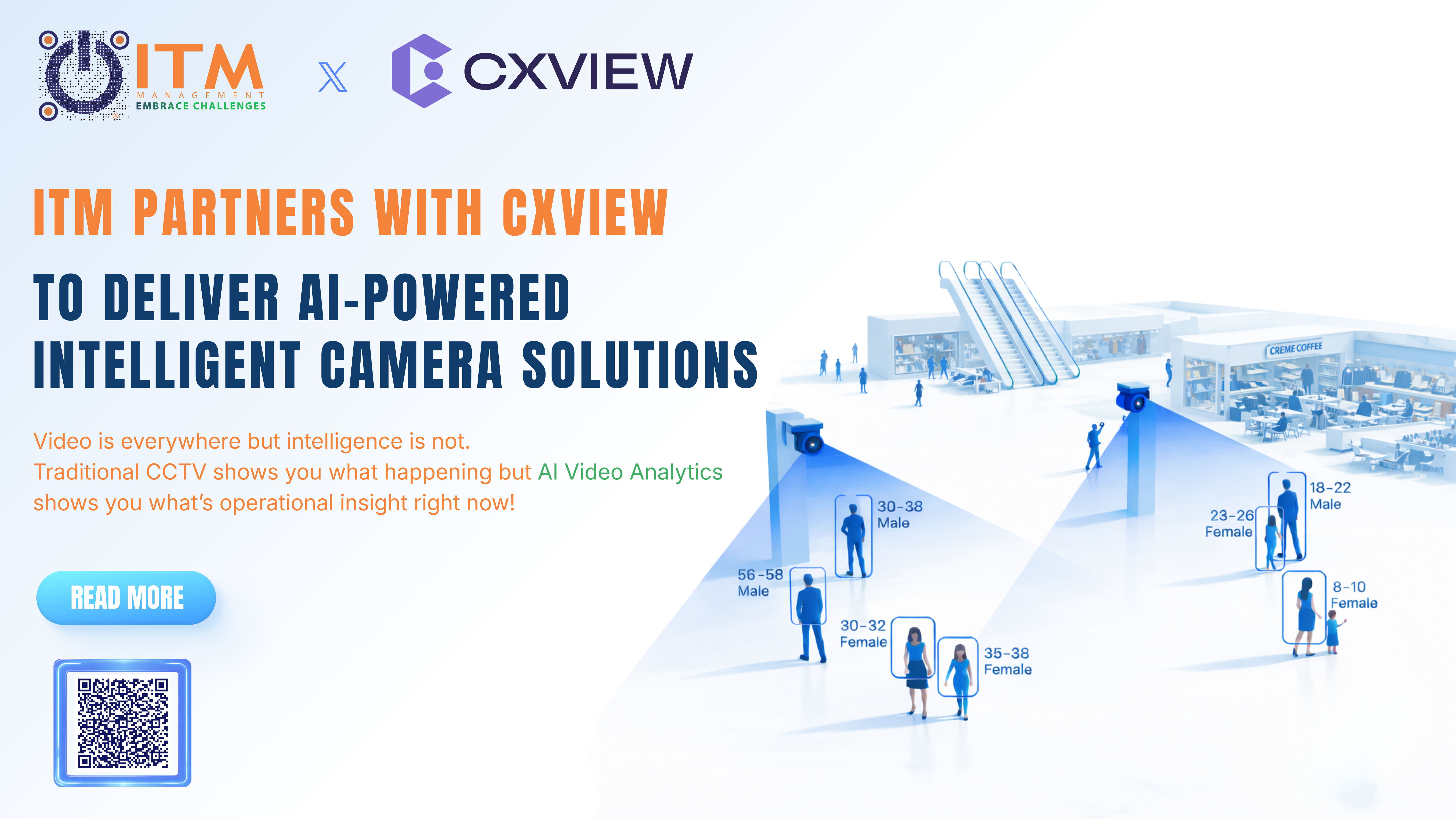
AI Video Analytics & Real-Time Intelligence applies artificial intelligence and computer vision to video streams to analyze customer movement and behavior as it happens.
Instead of passively recording footage, AI-enabled systems can:
-
- Count visitors automatically
- Track movement patterns across zones
- Measure dwell time and visit duration
- Identify traffic trends by time and day
Video is no longer just visual evidence it becomes structured, real-time data that supports retail decision-making. Retail leaders can now see visitor flow as it occurs, understand how customers move through different zones, measure dwell time and visit duration, and identify traffic patterns by time of day, day of week, or specific events.
When behavior becomes visible, decisions no longer rely on intuition. Store layouts can be optimized based on actual movement patterns. Promotional campaigns can be evaluated by how they change traffic and engagement. Staffing levels can be aligned with real demand rather than fixed schedules. Most importantly, executives gain a consistent, comparable view across the entire retail network.
How ITM and CXVIEW Turns Retail Video into Actionable Intelligence
One Device at the Entrance Can Do It All
CXVIEW delivers an advanced AI Video Analytics and Real-Time Intelligence platform purpose-built for large-scale retail environments. Its technology focuses on transforming entrance-level and in-store video into actionable intelligence that supports operational, commercial, and strategic decision-making.
With a single people-counting device installed at the entrance, CXVIEW digitizes the entire shopper journey from entry points through corridors and into individual storefronts. The system captures unified, real-time data on:
-
- Foot traffic volume
- Movement patterns
- Dwell time by zone
- Store visit rates
Rather than relying on fragmented reports, mall operators gain a single source of truth that reflects how shoppers actually interact with the space.
-
- Visitor Count (In / Out)
- Total Occupancy
- Outside Traffic
- Turn-in Rate
- Visit Duration
- Traffic Trends by Time and Day
These metrics enable mall management to forecast demand more accurately, optimize tenant mix, balance traffic across floors and zones, and improve leasing performance and operational efficiency.
When every movement is measured, every square meter can be optimized.
Beyond Retail: A Scalable Intelligence Layer
While retail and shopping malls are primary use cases, the same AI Video Analytics foundation applies across industries:
-
- Manufacturing: safety monitoring, restricted-area detection
- Logistics & Warehousing: movement tracking, flow optimization
- Healthcare, Hospitality, Education: space utilization and safety oversight
The common thread is the ability to automate observation and act on real-time insight.
ITM & CXVIEW: Delivering Retail AI Solutions in Vietnam
ITM is the official partner of CXVIEW, responsible for consulting, system integration, and deployment. With deep experience in enterprise environments, ITM enables retail chains to leverage their existing IP camera infrastructure, deploy quickly, and scale intelligently across multiple locations. More importantly, ITM ensures that video intelligence becomes part of a broader operational and decision-support framework, not just another standalone system.
Together, CXVIEW and ITM help retail organizations move from reactive, report-based management to proactive, real-time operations. When CEOs can clearly see what is happening at every entrance and across every store, retail optimization becomes a measurable, controllable, and continuously improving process.
In today’s competitive retail landscape, advantage no longer comes from opening more stores. It comes from understanding customers better and faster than the competition. AI Video Analytics and Real-Time Intelligence, delivered by CXVIEW and ITM, provide the foundation to do exactly that