
Scams targeting senior citizens continue to rise, becoming more convincing and emotionally manipulative every year. These scams rarely depend on advanced technology. Instead, they exploit trust, fear, urgency, and moments of confusion to pressure victims into making quick decisions.
This guide is designed to help senior citizens and their families understand common scam tactics, recognize early warning signs, and take practical steps to protect personal information, finances, and peace of mind.
Why Senior Citizens Are Often Targeted
Scammers deliberately target older adults because they often:
-
- Trust phone calls or messages that appear official
- Are less familiar with modern digital scam techniques
- Control savings, pensions, or retirement funds
By creating a sense of urgency or emotional distress, scammers try to prevent victims from slowing down and verifying the request. Awareness is the most effective way to break this cycle.
A Simple Rule That Prevents Most Scams: Pause, Verify, Confirm
Legitimate organizations will never pressure you to act immediately. Any request involving money, personal data, or urgent action can always wait until it has been properly verified. If something feels rushed, emotional, or threatening that is your signal to stop.
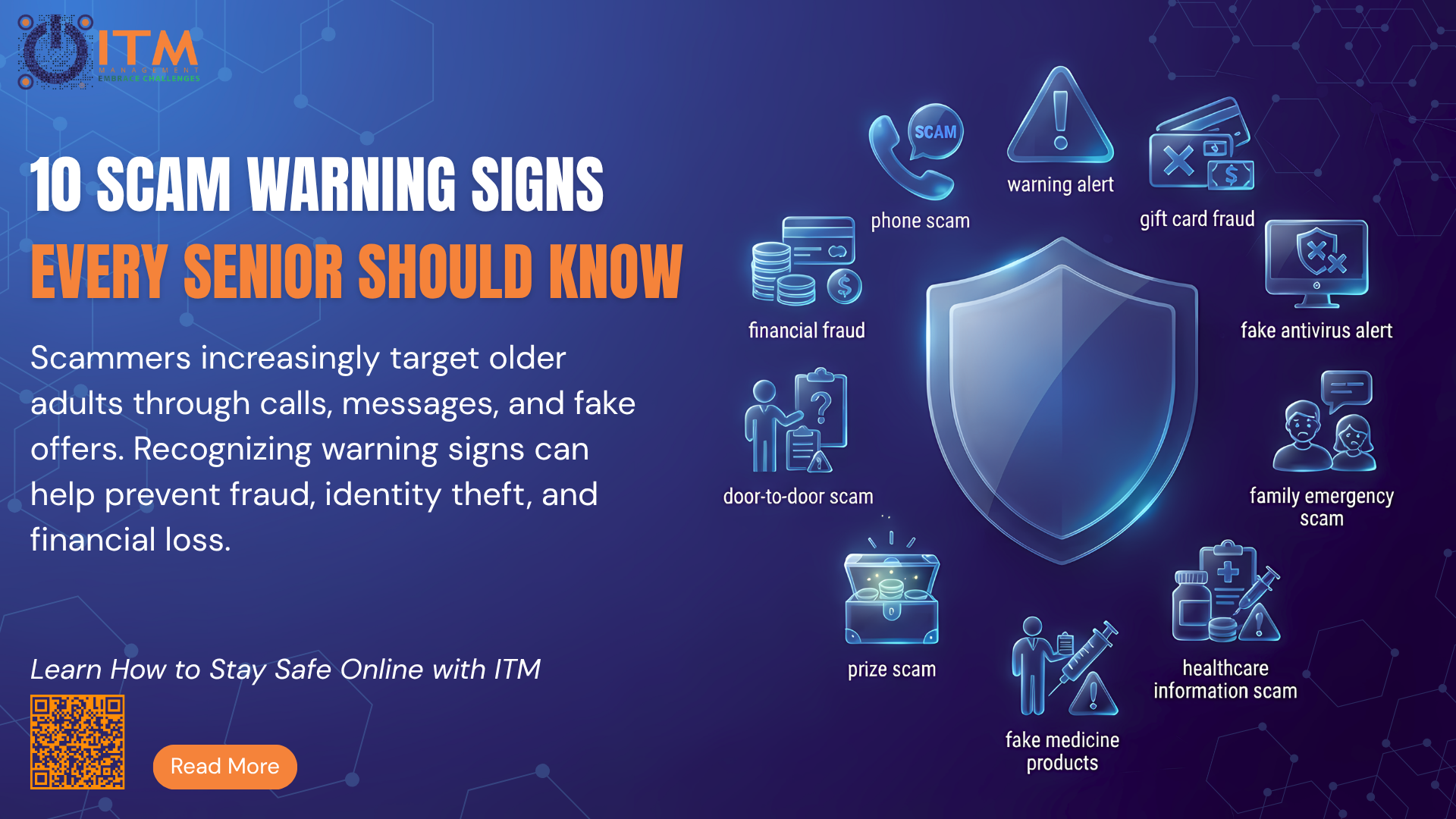
10 Common Scam Warning Signs Every Senior Should Know
1. Unexpected Phone Calls Asking for Personal Information
If you receive an unexpected call requesting personal or financial details, do not provide any information. Hang up, independently research the request, and call the organization using an official phone number you trust.
2. Urgent or Threatening Language
Scammers often claim accounts will be closed, benefits cancelled, or legal action taken if you don’t act immediately. Banks, government agencies, and healthcare providers do not operate this way. Real issues allow time for verification.
3. Offers That Seem Too Good to Be True
Unrealistic discounts, prizes, or “limited time” offers are classic scam tactics. Avoid clicking links, signing up, purchasing products, or sharing personal details.
4. Requests to Pay Using Gift Cards
Gift cards cannot be used to pay court fines, taxes, or medical expenses. No government agency or legitimate organization will ever demand payment via gift cards.
5. Fake Virus or Antivirus Alerts
Pop-up warnings claiming your computer is infected and urging you to call Microsoft or technical support are scams. Do not click anything or call the number simply close the browser.
6. Family Emergency or “Grandparent” Scams
Scammers may pretend to be a grandchild or family member in trouble and ask for money urgently. With voice cloning technology on the rise, families should agree on a private safe word to verify identity before sending money.
7. Requests for Medicare or Medicaid Information
No official organization will call unexpectedly to ask for Medicare or Medicaid IDs or personal information. Any such request should be treated as fraudulent.
8. Health Products Promising Miracle Cures
Ads or phone calls promoting miracle cures, anti-cancer products, or physical enhancements are common scams. Always consult your physician and purchase health products only from trusted, official sources.
9. Prize Notifications That Require Fees
If you are told you must pay taxes, shipping, or processing fees to receive a prize, it is a scam. Legitimate prizes never require upfront payments.
10. Door-to-Door Service Offers
Be cautious of anyone who shows up uninvited offering repairs or services. Never pay in advance payment should only be made after work is fully completed.
What to Do If You Suspect a Scam
-
- Do not engage or respond
- Do not send money or personal information
- Speak with a trusted family member or advisor
- Report the incident to appropriate consumer protection authorities
Acting quickly can prevent further harm.
Key Takeaway
Scams succeed not because of technology, but because they manipulate human behaviour. By slowing down, asking questions, and verifying requests, senior citizens can dramatically reduce their risk of becoming victims. Awareness remains the strongest form of protection.
How ITM Supports Cyber Awareness and Scam Prevention
Scams and social engineering attacks do not only affect individuals, they can also expose organizations to financial loss, data breaches, and reputational damage.
ITM helps businesses reduce human-driven cyber risk through cybersecurity expertise, proactive IT management, and employee awareness initiatives.
Our approach focuses on helping organizations recognize threats early, respond correctly, and avoid costly mistakes before damage occurs.
With ITM, organizations can:
-
- Improve employee awareness of phishing, scams, and social engineering threats
- Reduce cybersecurity risks caused by human error
- Strengthen overall security through proactive IT and cybersecurity solutions
- Support business continuity and long-term operational resilience
Learn how ITM’s cyber awareness and IT preparedness services can help protect your business, employees, and critical data.