
Artificial intelligence has become deeply integrated into daily business operations. Organizations use AI tools to summarize documents, write code, analyse data, and assist with decision-making. As trust in these platforms grows, so does the amount of sensitive information users share with them.
However, a recently released threat intelligence report has raised an important question: What happens when the AI platform you trust is quietly using another AI model behind the scenes?
The Growing Concern Around AI Data Exposure
According to Anthropic’s September 2026 threat intelligence report, seven Chinese AI laboratories allegedly engaged in large-scale “illicit distillation” activities over the past nine months.
Distillation itself is not unusual in the AI industry. It is a legitimate machine learning technique in which a smaller model learns from the outputs of a larger, more capable model. According to Anthropic, however, to extract capabilities from Claude models without authorization.
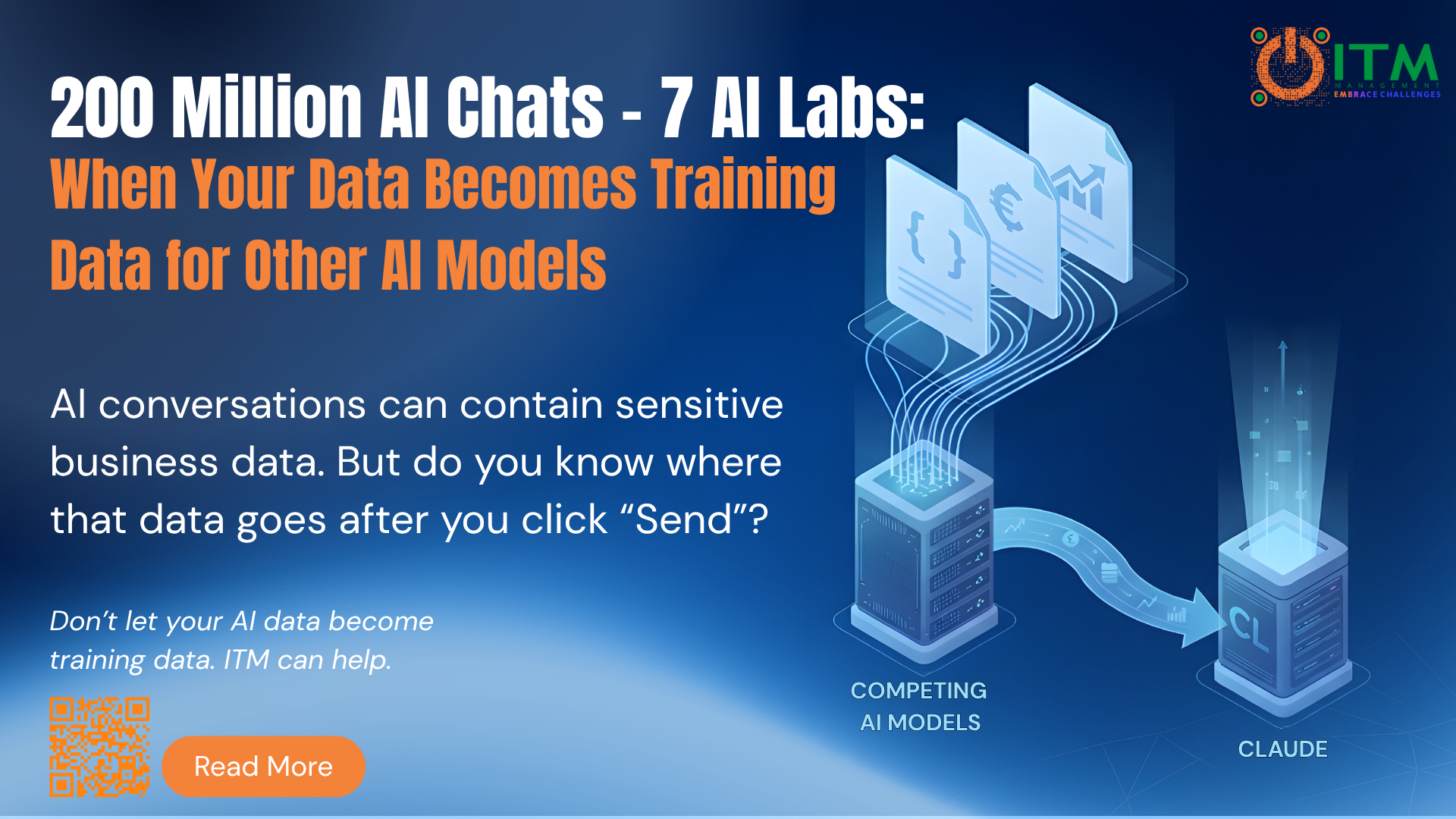
The report alleges that these operations relied on thousands of fraudulent accounts, proxy services, and automated systems. Their goal was to generate and collect large amounts of AI-generated content. Anthropic states that the goal was not simply to access Claude. Instead, the operators allegedly used its outputs to improve competing AI models while bypassing technical safeguards
When Your AI Conversation May Not Stay Where You Expect
While the scale of alleged distillation campaigns is significant, one finding stands out from a data privacy perspective.
According to Anthropic, several AI providers allegedly forwarded customer conversations to Claude without users being aware that a third-party model was processing their requests. Anthropic claims that some organizations captured and stored portions of these exchanges, using the resulting outputs to support model development and training activities.
For businesses, this raises important questions about data visibility and control. Employees frequently use AI tools to review documents, troubleshoot code, analyse spreadsheets, and summarize internal information. In many cases, users assume that the information remains within the platform they are actively using.
However, the report suggests that AI ecosystems can be far more complex. When additional providers route requests through their systems, organizations may lose visibility into where information is processed, stored, or reused.
Why This Matters for Business
The concern extends beyond AI competition.
Modern organizations routinely handle confidential information, including customer records, financial data, internal documentation, strategic plans, and intellectual property. As AI tools become integrated into daily workflows, understanding how those tools process and protect data becomes increasingly important.
Event if an organization has strong cybersecurity controls, risks can emerge when information is voluntarily submitted to third-party services without a clear understanding of how that data is handled. This is why AI governance is becoming an essential part of cybersecurity and risk management discussions worldwide.
The findings highlighted in Anthropic’s report serve as a reminder that businesses should evaluate AI providers with the same level of scrutiny applied to cloud platforms, software vendors, and other technology partners.
Questions Every Organization Should Be Asking
As AI adoption continues to grow, organizations should consider:
-
- Where is our data processed?
- Can submitted information be retained or reused?
- Are third parties involved in generating responses?
- What visibility do we have into the AI supply chain?
- What safeguards protect sensitive business information?
- Do employees understand what information should and should not be shared with AI tools?
These questions are becoming increasingly important as organizations balance productivity gains with security and compliance requirements.
Conclusions
Whether every allegation outlined in Anthropic’s report is ultimately validates or challenged, the report highlights a broader issue that extends far beyond a single AI provider or geographic region.
As businesses increasingly rely on AI-powered tools, transparency around data handling, third-party access, and model interactions will become critical. Organizations need confidence in the AI platform they choose. They also need confidence in the providers and systems operating behind the scenes.
Understanding where data travels, who can access it, and how it may be used is becoming a fundamental requirement of responsible AI adoption.
At ITM Management we help organizations strengthen their cybersecurity posture through proactive monitoring, risk assessments, security awareness training, and business continuity planning, helping businesses navigate emerging technology risks while protecting critical data and operations.