
In a hyperconnected world, digital security is no longer confined to institutions
Cybersecurity has traditionally been framed as a technical and organizational challenge. Governments invest in national cyber strategies, enterprises deploy advanced security infrastructure, and institutions establish policies to protect digital systems. This framing, however, no longer reflects how cyber risk most commonly emerges.
Today, a growing share of digital activity takes place outside institutional environments. Work, education, financial transactions and social interaction increasingly occur within households. As a result, the home has become a critical but often overlooked component of the global digital ecosystem.
In this context, cybersecurity no longer begins at the office. It begins at home.
The home as a digital environment
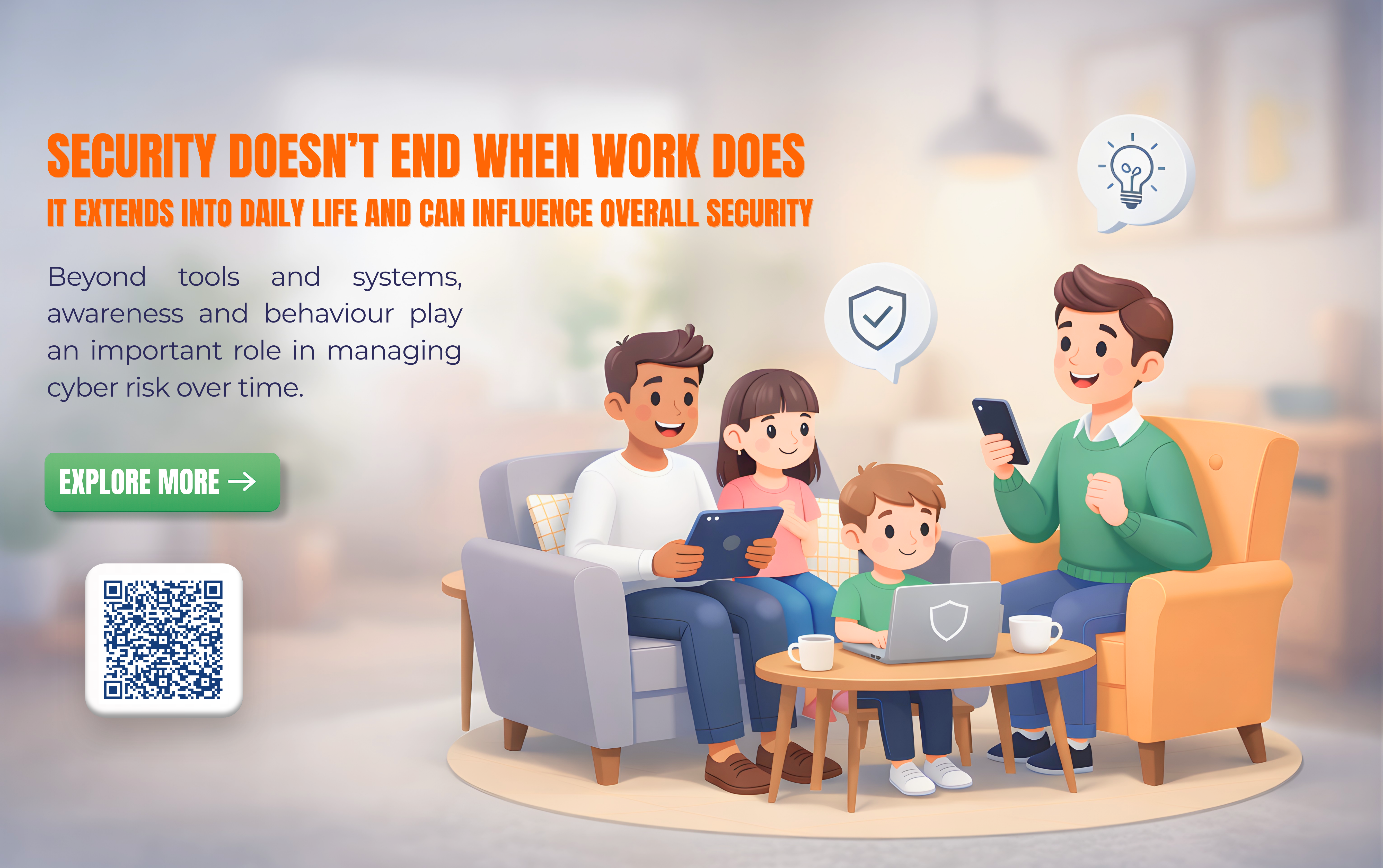
Modern households now function within complex digital environments. Adults routinely access professional systems from personal devices. Children learn, communicate and entertain themselves through online platforms. Families manage finances, personal records and essential services through internet-connected applications.
Structurally, many households resemble small organizations. They involve multiple users with different levels of digital literacy, a wide range of connected devices, and continuous creation and storage of data.
Unlike organizations, however, families rarely adopt structured approaches to managing digital risk. Shared security principles are uncommon. Responsibility is often undefined. Basic digital hygiene practices vary widely between individuals within the same household.
This absence of structure has become increasingly consequential as household-level digital dependence deepens.
Why cybercriminals increasingly target individuals and families
Cybercriminal strategies have evolved alongside digital adoption. While large-scale attacks against enterprises remain a concern, a significant proportion of cyber incidents today focus on individuals and households.
One driver of this shift is economic. Personal data, digital identities and access credentials hold tangible value in illicit markets, regardless of whether individuals view themselves as important targets.
Another driver is fragmentation. Within households, devices, accounts and data are typically managed independently. This lack of coordination creates exploitable gaps that require minimal effort to penetrate. At the personal and household level, these conditions make individuals easier targets than well-defended institutional systems.
Human behaviour as the primary attack surface
As digital infrastructure becomes more secure by design, cyber risk increasingly concentrates on human behaviour rather than technical vulnerabilities.
For individuals and households, many successful incidents do not rely on advanced exploits. They arise from ordinary decisions made under pressure, uncertainty or misplaced trust. These include responding to deceptive messages, sharing information too quickly, or assuming that security protections operate automatically. These behaviours are not irrational. They reflect limited awareness and the absence of shared responsibility rather than negligence.
This shift has important implications. It suggests that improving cybersecurity outcomes depends less on technical sophistication and more on education, judgement and behavioural consistency.
The Absence of Clear Ownership as a Systemic Weakness
In organizations, cybersecurity is typically managed through clearly defined roles and responsibilities. At the family level, this clarity rarely exists.
Digital safety is often seen as a shared concern, but without a designated owner. Decisions related to devices, accounts, and data protection are made independently, with convenience prioritized over consistency.
When responsibility is fragmented, weaknesses emerge quietly and are often only recognized after an incident occurs making this a risk that is frequently underestimated in family environments.
The role of a Chief Family Security Officer
The concept of a Chief Family Security Officer (CFSO) addresses this gap by introducing a simple governance principle: every household benefits from having a clear steward of digital safety.
A CFSO does not require technical expertise or formal authority. The role is defined by awareness, consistency and leadership. It involves recognizing common risks, encouraging safer digital behaviour and facilitating open discussion about technology use within the family.
By assigning responsibility, households can move from reactive responses to proactive digital resilience. Cybersecurity becomes an ongoing consideration rather than an after-the-fact concern.
Children, digital exposure and long-term resilience
Children and young people are among the most active participants in digital environments. They are also among the least equipped to recognize manipulation, misinformation and long-term consequences. For many families, children are the primary reason the CFSO role becomes necessary.
Without guidance, young users face heightened exposure to online risks, including harmful content, privacy violations and social engineering. Restrictive measures alone are insufficient to address these challenges.
Long-term digital resilience is built through education, dialogue and trust. Families that actively engage with children about their digital experiences contribute to the development of more informed and resilient future citizens.
From Family Habits to Shared Social Responsibility
Digital habits formed within the family extend beyond personal life. They shape behavior in the workplace, in education, and across public systems. When individuals lack awareness of basic cybersecurity risks in their daily lives, organizational security measures face additional strain. Conversely, safe habits developed at home help strengthen the overall digital resilience of organizations and society.
This highlights an important reality: Cybersecurity at the family level is not a private matter, but part of a broader social responsibility. As digital transformation continues to blur the boundaries between personal and professional environments, strengthening cybersecurity within households becomes an essential component of societal resilience. Cybersecurity is built on infrastructure, but it ultimately succeeds or fails because of people. For most individuals, that human factor begins at home.
Building digital resilience starts with understanding people
As digital life becomes inseparable from daily life, cybersecurity increasingly depends on people, not platforms. Strengthening digital resilience therefore requires more than technology alone. It requires awareness, shared responsibility and a human-centered approach to security.
ITM works with families and organizations to help build that foundation. Through education, risk understanding and practical guidance, ITM focuses on strengthening digital resilience by addressing how people interact with technology in everyday life.